سید فخرالدین افضلی
پنجشنبه سیزدهم خرداد ۱۳۸۹، 12:56
جهت دانلود و مطالعه جدیدترین بولتن انجمن بین المللی خاکشناسی اینجا را کلیک نمائید.
 The
Architecture and Biology of Soils : Life in Inner
Space.
Edited
by K Ritz, Cranfield University,
UK, I M Young, University of Abertay, Dundee, July
2010.
Hardback,
400 Pages.
9781845935320UK
£95.00,
€135.00. Soil is a fundamental and critical, yet often overlooked, component of
terrestrial ecosystems. It is an extremely complex environment, supporting
levels of diversity far greater than any ecosystem above ground. This book
explores how soil structure develops and the consequences this has for life
underground. The effects of spatial arrangement, of soil's physical and
biological components on their interaction and function are used to demonstrate
their roles in ecosystem dynamics. Bringing together existing knowledge in the
areas of soil biology and physics, this book explores the key characteristics of
soil spatial architecture.
The
Architecture and Biology of Soils : Life in Inner
Space.
Edited
by K Ritz, Cranfield University,
UK, I M Young, University of Abertay, Dundee, July
2010.
Hardback,
400 Pages.
9781845935320UK
£95.00,
€135.00. Soil is a fundamental and critical, yet often overlooked, component of
terrestrial ecosystems. It is an extremely complex environment, supporting
levels of diversity far greater than any ecosystem above ground. This book
explores how soil structure develops and the consequences this has for life
underground. The effects of spatial arrangement, of soil's physical and
biological components on their interaction and function are used to demonstrate
their roles in ecosystem dynamics. Bringing together existing knowledge in the
areas of soil biology and physics, this book explores the key characteristics of
soil spatial architecture.
 Soil
Ecology and Management. By
J K Whalen, McGill University,
Canada, L Sampedro, Centro de
Investigación Forestal de Lourizán Pontevedra,
Galicia, Spain
December 2009.
Paperback,
304 Pages.
9781845935634.
£37.50
€55.00.
Soil
Ecology and Management describes the organisms inhabiting the soil, their
functions and interactions and the dimensions of human impact on the activity of
soil organisms and soil ecological function. Chapters discuss basic soil
characteristics and biogeochemical cycling, key soil flora and fauna as well as
community-level dynamics (soil food webs). Unlike other soil biology and ecology
textbooks, this text also conveys a better understanding of how human activities
impact upon soil ecology in a section on ecosystem management and its effects on
soil biota. The authors provide a unique perspective on the utility of soil
organisms by exploring the biodiversity of soil food webs, how they are impacted
by human activities and intervention and their
management.
Soil
Ecology and Management. By
J K Whalen, McGill University,
Canada, L Sampedro, Centro de
Investigación Forestal de Lourizán Pontevedra,
Galicia, Spain
December 2009.
Paperback,
304 Pages.
9781845935634.
£37.50
€55.00.
Soil
Ecology and Management describes the organisms inhabiting the soil, their
functions and interactions and the dimensions of human impact on the activity of
soil organisms and soil ecological function. Chapters discuss basic soil
characteristics and biogeochemical cycling, key soil flora and fauna as well as
community-level dynamics (soil food webs). Unlike other soil biology and ecology
textbooks, this text also conveys a better understanding of how human activities
impact upon soil ecology in a section on ecosystem management and its effects on
soil biota. The authors provide a unique perspective on the utility of soil
organisms by exploring the biodiversity of soil food webs, how they are impacted
by human activities and intervention and their
management.
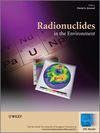 Radionuclides
in the Environment.
David
Atwood (Editor).
ISBN:
978-0-470-71434-8.
Hardcover,
522
pages.
Wiley, May
2010
£150.00
/ €172.50.
The
global growth of the nuclear power industry will require a complete
understanding of the impact of radionuclides in the environment. A great deal is
known about the sources of radionuclides and their occurrence in the
environment. However, the basic chemistry of these elements is a continually
growing area of research. There is no single resource for obtaining a holistic
understanding of radionuclide environmental chemisty. The proposed book will
provide this resource with an element-specific coverage of the occurrence,
chemistry, and speciation of environmental radionuclides written by experts in
the area. The coverage for each element will be presented in a standard format,
which will make it easier for the user to find all relevant information:
1.
Occurrence.
2.
Chemistry and Speciation with regards to: a) soil (with adsorption or reactions
on humic matter and mineral phases);
b) water (may include biological uptake where this information is
known);
c) air 3. Separation
Techniques;
4.
Analytical Characterization Techniques;
5.
Remediation (potential techniques or existing
technologies).
Radionuclides
in the Environment.
David
Atwood (Editor).
ISBN:
978-0-470-71434-8.
Hardcover,
522
pages.
Wiley, May
2010
£150.00
/ €172.50.
The
global growth of the nuclear power industry will require a complete
understanding of the impact of radionuclides in the environment. A great deal is
known about the sources of radionuclides and their occurrence in the
environment. However, the basic chemistry of these elements is a continually
growing area of research. There is no single resource for obtaining a holistic
understanding of radionuclide environmental chemisty. The proposed book will
provide this resource with an element-specific coverage of the occurrence,
chemistry, and speciation of environmental radionuclides written by experts in
the area. The coverage for each element will be presented in a standard format,
which will make it easier for the user to find all relevant information:
1.
Occurrence.
2.
Chemistry and Speciation with regards to: a) soil (with adsorption or reactions
on humic matter and mineral phases);
b) water (may include biological uptake where this information is
known);
c) air 3. Separation
Techniques;
4.
Analytical Characterization Techniques;
5.
Remediation (potential techniques or existing
technologies).
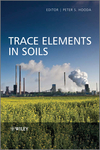 Trace
Elements in Soils.
Peter
Hooda (Editor).
ISBN:
978-1-4051-6037-7.
Hardcover,
616
pages.
April
2010, Wiley-Blackwell.
£125.00,
€143.80
Trace
elements occur naturally in soils and some are essential nutrients for plant
growth as well as human and animal health. However, at elevated levels, all
trace elements become potentially toxic. Anthropogenic input of trace elements
into the natural environment therefore poses a range of ecological and health
problems. As a result of their persistence and potential toxicity, trace
elements continue to receive widespread scientific and legislative attention.
Trace Elements in Soils reviews the latest research in the field, providing a
comprehensive overview of the chemistry, analysis, fate and regulation of trace
elements in soils, as well as remediation strategies for contaminated soil. The
book is divided into four sections: (i)
Basic principles, processes, sampling and analytical aspects: presents an
overview including general soil chemistry, soil sampling, analysis,
fractionation and speciation. (ii)
Long-term
issues, impacts and predictive modelling: reviews major sources of metal inputs,
the impact on soil ecology, trace element deficient soils and chemical
speciation modelling. (iii)
Bioavailability, risk assessment and remediation: discusses bioavailability,
regulatory limits and cleanup technology for contaminated soils including
phytoremediation and trace element immobilization.
(iv)
Characteristics and behaviour of individual
elements.
Trace
Elements in Soils.
Peter
Hooda (Editor).
ISBN:
978-1-4051-6037-7.
Hardcover,
616
pages.
April
2010, Wiley-Blackwell.
£125.00,
€143.80
Trace
elements occur naturally in soils and some are essential nutrients for plant
growth as well as human and animal health. However, at elevated levels, all
trace elements become potentially toxic. Anthropogenic input of trace elements
into the natural environment therefore poses a range of ecological and health
problems. As a result of their persistence and potential toxicity, trace
elements continue to receive widespread scientific and legislative attention.
Trace Elements in Soils reviews the latest research in the field, providing a
comprehensive overview of the chemistry, analysis, fate and regulation of trace
elements in soils, as well as remediation strategies for contaminated soil. The
book is divided into four sections: (i)
Basic principles, processes, sampling and analytical aspects: presents an
overview including general soil chemistry, soil sampling, analysis,
fractionation and speciation. (ii)
Long-term
issues, impacts and predictive modelling: reviews major sources of metal inputs,
the impact on soil ecology, trace element deficient soils and chemical
speciation modelling. (iii)
Bioavailability, risk assessment and remediation: discusses bioavailability,
regulatory limits and cleanup technology for contaminated soils including
phytoremediation and trace element immobilization.
(iv)
Characteristics and behaviour of individual
elements.

 سایتی که می خواهم معرفی کنم سایتی است که به نوعی بسیار جالب آمار جهان بخصوص آماری که مربوط به پایداری زمین است را به فیلم وگراف و ... تبدیل می کند و به طرز زیبائی نمایش می دهد حتی آمار تکی کشورهائی مثل ایران!